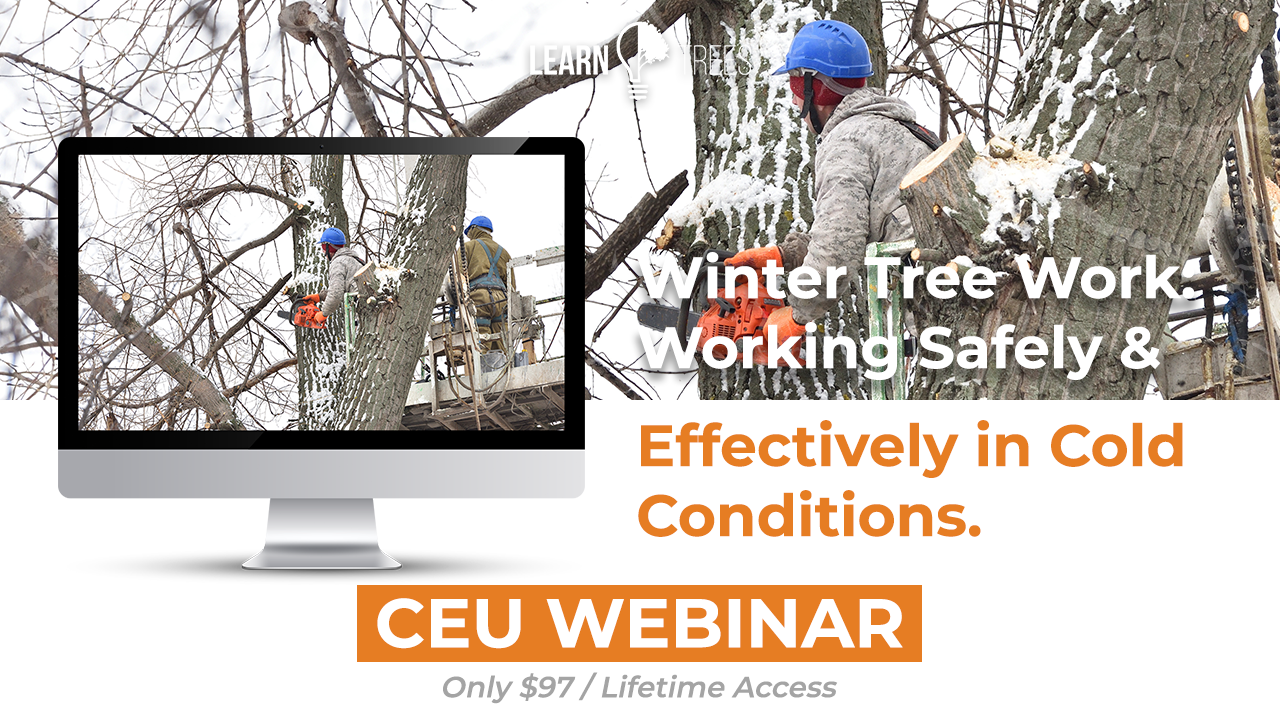
Winter Tree Work: Working Safely & Effectively in Cold Conditions
Presented by William Scott
ISA Board Certified Master Arborist | Urban Forest Professional
Professional tree work continues through winter, but cold temperatures, snow, ice, frozen or thawing soil, and changing weather can significantly affect tree-care decisions and field operations.
This course examines practical winter arboriculture for private tree care, municipal forestry, utility vegetation management, Tree Climbers, and Aerial Lift Specialists. Participants will explore how winter conditions affect trees, climbing and aerial operations, job-site safety, structural inspection, and vegetation management. The course will also cover practical winter-care strategies, including watering, equipment considerations, and determining when conditions require work to be modified, delayed, or discontinued.
Learning Objectives
Participants completing this course will be able to:
- Explain how dormancy, frozen soil, freeze-thaw cycles, snow, ice, and winter desiccation affect trees and tree-care decisions.
- Use dormant-season conditions to improve structural inspection and pruning decisions.
- Evaluate winter climbing conditions, including snow and ice, footing, equipment, work positioning, and changing weather.
- Evaluate winter aerial-device operations, including access, ground conditions, setup, and stabilization.
- Evaluate winter vegetation-management conditions around utility infrastructure.
- Develop practical winter-watering procedures based on soil and weather conditions.
- Determine when winter tree-care or aerial operations should be modified, delayed, or discontinued.
Earn the Following CEUs Upon Completion:
- 3.5 CEUs – ISA Certified Arborist
- 1.0 CEU – BCMA Science
- 3.0 CEUs – BCMA Practice
- 2.0 CEUs – ISA Certified Urban Forest Professional
- 1.0 CEU – ISA Certified Arborist Utility Specialist
- 1.0 CEU – ISA Certified Tree Climber
- 1.0 CEU – ISA Certified Tree Worker Aerial Lift Specialist