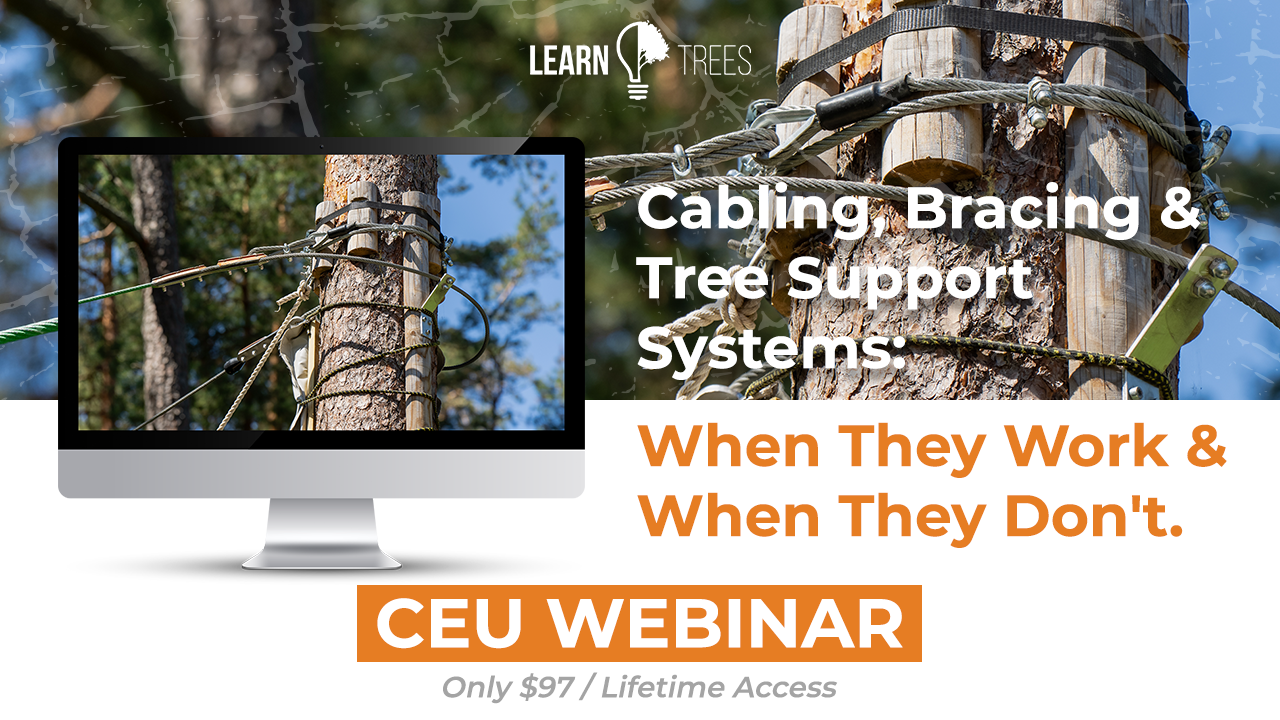
Cabling, Bracing & Tree Support Systems: When They Work and When They Don't
Presented by William Scott
ISA Board Certified Master Arborist | Urban Forest Professional
Supplemental support systems can help arborists manage structural conditions while retaining trees or branches that might otherwise require aggressive pruning or removal—but proper selection, installation, inspection, and maintenance are critical.
This course examines cabling, bracing, and supplemental tree-support systems from planning through long-term management. Participants will compare static and dynamic systems, evaluate attachment locations and hardware, and explore installation and inspection from both Tree Climber and Aerial Lift Specialist perspectives. The course will also address existing support systems, common hazards, and determining when systems should be adjusted, replaced, or removed.
Learning Objectives
Participants completing this course will be able to:
- Identify structural conditions where supplemental support may or may not be appropriate.
- Compare static cabling, dynamic systems, bracing, and other supplemental-support approaches.
- Evaluate attachment locations, system geometry, hardware, tree movement, and pruning considerations.
- Evaluate installation and inspection considerations from Tree Climber and Aerial Lift Specialist perspectives.
- Recognize hazards associated with aerial access, installation, and inspection.
- Identify changes in tree growth, hardware condition, deterioration, and improper installation.
- Establish appropriate inspection, maintenance, adjustment, replacement, and long-term management procedures.
Earn the Following CEUs Upon Completion:
- 3.5 CEUs – ISA Certified Arborist
- 3.5 CEUs – BCMA Practice
- 0.5 CEU – BCMA Management
- 1.5 CEUs – ISA Certified Urban Forest Professional
- 2.0 CEUs – ISA Certified Tree Climber
- 2.0 CEUs – ISA Certified Tree Worker Aerial Lift Specialist